The earliest manifesto published in Osiris stated that Osiris would publish work that had an “organic” source. This simply meant that art in the broadest sense of the word should be free to explore those spiritual, psychological, emotional, and intellectual aspects of people’s lives that were not connected to nations or social groupings. It is clear to me now that these thoughts were related to my own education in philosophy and theology and also to the intense debate on the relationship between various fields of intellectual inquiry, namely the sciences and the arts.
Osiris has always published work by people who take risks, who expose language, explore the relationships between people and our planet, between people and their consciousness, memories, interactions with others (animal, human, plant, etc.), and who allow the formal elements of art and literature to express a point of view not necessarily represented by narrative discourse. We have not been part of the American fascination with narrative. Narrative elements, of course, are often present in all kinds of abstract discourse and art, but the art of story telling and persuasion has not been something Osiris nurtures.
Osiris can be read from cover to cover; there is a conscious ordering of elements. Each echoes or anticipates or concludes and intensifies the one it precedes or follows. Each issue is a whole, a gesture, a movement towards something beyond each contributor’s work.
Each issue is an act of faith, a Kierkegaardian leap of faith. Is there anything out there? How can we include the very young, those whose voices are so vital to the continued evolution of the community of artists and writers. Perfection is not a necessary element; the monotonous formulaic use of language that often characterizes academic writing is something we do not embrace.
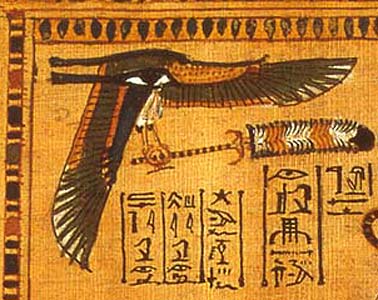
Osiris brings together voices and visions, moments and mysteries, languages and speech, dreams and outrage, perambulations, meditations, rhapsodies and incantation. A journal named for the god Osiris, son of Geb and Nut, whose sister and wife Isis restored him to life after his brother had murdered him. Transformation and devotion, mystery and quest.
April 2022, 50 years after Osiris began in Averill Park, New York, in a small, rented house on the State Highway. The manifesto of Osiris 1 belongs to the turbulent times in which it was written. Art is Radical Being. Art is radical organic expression of man’s spiritual being in time.
Osiris 2 continues to express a different kind of manifesto, expressed in English, French, and German. Art is the true mysticism of a universally human body. Art makes no distinction between the rhythm of flesh and blood, individual soul, and the world as it evolves.
Osiris 3 and Osiris 4 repeat the manifesto in English, French, German, and Italian.
Osiris 5 changes focus slightly. Art as Radical Being, Irreducible Form of Human Expression.
Osiris 6: Art as Transfiguration of Darkness.
Osiris remembers dismemberment and fragmentation, oblivion and chaos. Osiris remembers sudden wellness, fullness, regeneration. The voices of Osiris move freely between societies and lands, peoples and individuals. They understand the fertility of freedom of expression, the compassion of sharing without judgement, of celebrating the human experience.
50 years of voices— 50 years of fostering expression in many languages—50 years of trying to keep poetry alive, to offer a different view of life decade after decade—50 years of raising the translucent flags of the human voice, heard above the roar of conflicts and in the hollowest recesses of the heart.
April 23, 2022
 Osiris Poetry