Years and years I loved you when you lay in my womb. Joyce
La terre est un entassement de pages douloureuses, qui sont poussées vers le ciel au lever du vent et font penser au souffle.
Là où la sœur du sommeil se cache, se rendent visibles tant de petits murs. « tout annonce ta présence, ma lassitude, notre interminable patienter. »
on n’entend pas un bruit et tout événement s’ouvre en paroles animées qui serrent de toutes parts les choses. commencent ainsi sur la terre bien des récits privés de fondement. « des années durant je t’ai aimée lorsque tu me tendais la main. »
peu avant que la jeune fille se remette à marcher, le temps se met à renverser la terre, à faire tourner le ciel, à vider les maisons et à les emplir de nouvelles voix. sans ce souffle, les lèvres se glacent et se serre le cœur.
Languages in use this issue of Osiris, #82, (60 pages perfect bound $20.00, PO Box 297, Deerfield, Massachusetts 01342, USA. osirispoetry@gmail.com) are English, French, German, Italian, Norwegian and Spanish. Not sure what the opposite of synaesthesia music-colour is, but in this instance Hanne Bramness claims that snow light is noisy. Andrea Moorhead herself seems to pick up on this in her prose poem pieces, Mutterings from the Source. Indeed many of the poems here, perceptions skewed, even strips of Robert Moorhead’s b&w photos being offset, appear to attempt an understanding of what is yet beyond understanding. And all is presented in the usual quality production.
Osiris 90
I had thought that, in these peculiar times, all that I would be talking of here would be these ‘peculiar times.’ That however was to underestimate the dedication of editors and publishers. For instance the latest crossborder, international issue of Osiris #90 (www.osirispoetry.com) 60 pages perfect bound, $24.00/€22.00). This issue opens with a prose poem of wonderful whimsy by Paul B. Roth. The next time I found myself brought to a halt was by the English translation from the German of Matthias Politski’s poems, conventionally spaced. Whereas Andrea Moorhead’s prose poem Vigil had a delightful, preposterous even, touch of magic realism. Similarly Astrid Cabral’s, translated from the Portuguese. The issue enlivened as usual by Robert Moorhead’s enthralling visual fantasies.
Swiveling points of view….a poem from under the tablecloth or next to the window, a poem from the dried blood of major catastrophes, a poem from dreamland or the labyrinth of daydreams, a poem chiseled from prose, from speech, from exclamations of wonderment, a poem-photo, a photo absorbed into words, a gaze, a glance, a profound silence.
Blue poems, rose poems, turquoise poems, translucent poems.
Printing the tongue on paper, the stuttering of air, the great deep murmuring of the throat… moving towards sharing the flickering of attention, the focus of attentiveness, drooping sorrow, ecstasy, contentment….
The earliest manifesto published in Osiris stated that Osiris would publish work that had an “organic” source. This simply meant that art in the broadest sense of the word should be free to explore those spiritual, psychological, emotional, and intellectual aspects of people’s lives that were not connected to nations or social groupings. It is clear to me now that these thoughts were related to my own education in philosophy and theology and also to the intense debate on the relationship between various fields of intellectual inquiry, namely the sciences and the arts.
Osiris has always published work by people who take risks, who expose language, explore the relationships between people and our planet, between people and their consciousness, memories, interactions with others (animal, human, plant, etc.), and who allow the formal elements of art and literature to express a point of view not necessarily represented by narrative discourse. We have not been part of the American fascination with narrative. Narrative elements, of course, are often present in all kinds of abstract discourse and art, but the art of story telling and persuasion has not been something Osiris nurtures.
Osiris can be read from cover to cover; there is a conscious ordering of elements. Each echoes or anticipates or concludes and intensifies the one it precedes or follows. Each issue is a whole, a gesture, a movement towards something beyond each contributor’s work.
Each issue is an act of faith, a Kierkegaardian leap of faith. Is there anything out there? How can we include the very young, those whose voices are so vital to the continued evolution of the community of artists and writers. Perfection is not a necessary element; the monotonous formulaic use of language that often characterizes academic writing is something we do not embrace.
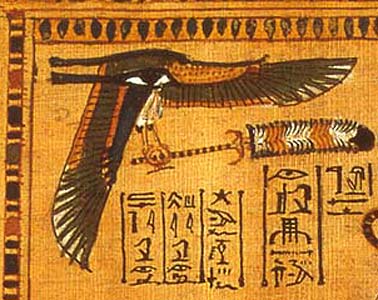
Osiris brings together voices and visions, moments and mysteries, languages and speech, dreams and outrage, perambulations, meditations, rhapsodies and incantation. A journal named for the god Osiris, son of Geb and Nut, whose sister and wife Isis restored him to life after his brother had murdered him. Transformation and devotion, mystery and quest.
April 2022, 50 years after Osiris began in Averill Park, New York, in a small, rented house on the State Highway. The manifesto of Osiris 1 belongs to the turbulent times in which it was written. Art is Radical Being. Art is radical organic expression of man’s spiritual being in time.
Osiris 2 continues to express a different kind of manifesto, expressed in English, French, and German. Art is the true mysticism of a universally human body. Art makes no distinction between the rhythm of flesh and blood, individual soul, and the world as it evolves.
Osiris 3 and Osiris 4 repeat the manifesto in English, French, German, and Italian.
Osiris 5 changes focus slightly. Art as Radical Being, Irreducible Form of Human Expression.
Osiris 6: Art as Transfiguration of Darkness.
Osiris remembers dismemberment and fragmentation, oblivion and chaos. Osiris remembers sudden wellness, fullness, regeneration. The voices of Osiris move freely between societies and lands, peoples and individuals. They understand the fertility of freedom of expression, the compassion of sharing without judgement, of celebrating the human experience.
50 years of voices— 50 years of fostering expression in many languages—50 years of trying to keep poetry alive, to offer a different view of life decade after decade—50 years of raising the translucent flags of the human voice, heard above the roar of conflicts and in the hollowest recesses of the heart.
Revue biannuelle de poésie contemporaine, Osiris paraît depuis 42 ans. Andrea Moorhead, universitaire, poète, traductrice et photographe (notamment plusieurs recueils parus au Noroît, Au loin en 2010, Géocide en 2013), est la maîtresse d’œuvre de ce bel ouvrage. Elle-même écrit en anglais et en français, ce qu’elle nomme voyage immobile, mais il n’est pour elle qu’une langue : celle de l’autre. On comprendra mieux l’assise d’Osiris : une Babel rayonnante. Se découvrent en langue originale avec leur traduction en anglais, les poèmes de Gustav Munch-Petersen, voix danoise où terre et ciel mêlent leur force : A star sparkles green , in star-tears, star-tear alone/ In the salt of my childhood’s hot stone (EARLY MORNING) , en langue anglaise, neuf poètes : Frances Presley, Sarah Cave, Steve Barfield, Simon Perchik, Alan Britt, John Sibley Williams (les poèmes HOUSE ON FIRE et NO ANIMAL sont saisissants), Rob Cook, son poème FEAR glacerait le sang si ce n’était cette extraordinaire appétence de vivre, ces vers font étrangement songer au tableau de Van Gogh Les Souliers, 1886 :The dogs can already smell /How my shoes will fail /On one of the days missing /Between October et December, suivent les poèmes d’ Andrea Moorhead, et de Randi Ward. On peut lire en français les poèmes de Françoise Hàn Serons nous l’après-midi d’été/ de ceux-là venus quand la Terre/ aura changé son inclinaison /, d’Yves Broussard et de Céline Zins, en grec, avec leur traduction, les poèmes de Anna Griva et Spiros Aravanis, en italien ceux de Laura Caccia et en portugais avec leur traduction ceux de Salgado Maranhăo. S’ajoutent la photographie d’Andrea Moorhead THE MEADOWSet la reproduction du tableau de Robert Moorhead ARABIC LESSONoù la métamorphose du graphème arabe s’offre en diremultiforme, lumière et chants entrelacés.
Cette revue est résolument moderne, outre offrir un juste panorama de la poésie contemporaine internationale, dans la diversité des langues données à entendre et à lire, elle fait résonner le Verbe : Osiris opère ses pouvoirs.




 Osiris Poetry